
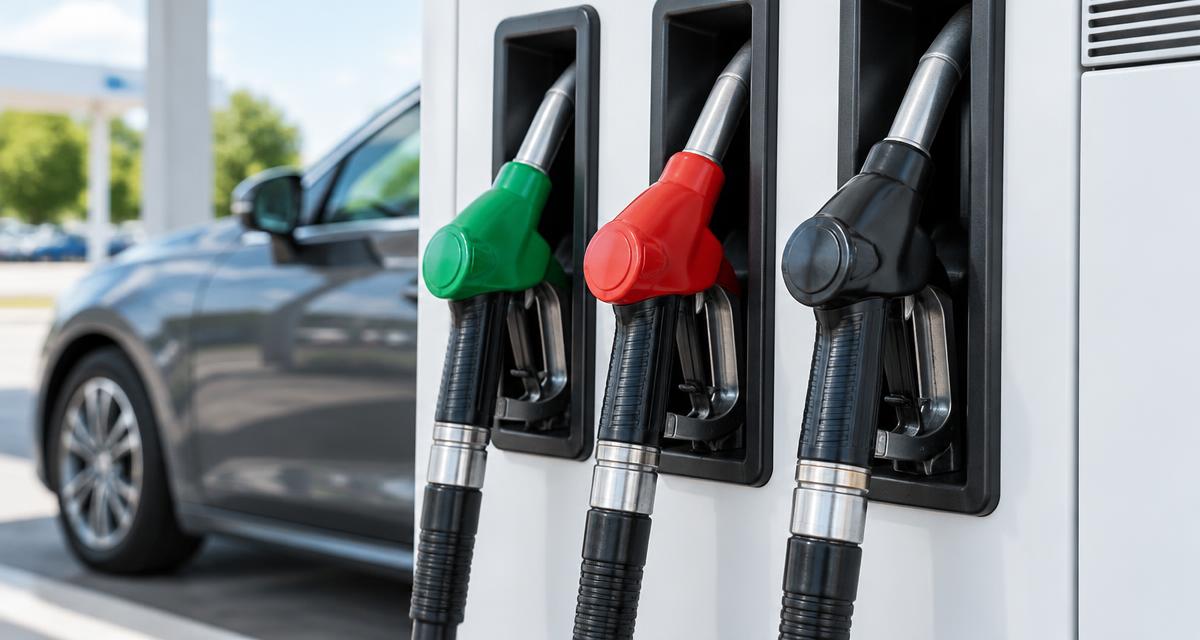
Use the gasoline grade specified by your vehicle manufacturer. If premium is required, use it. If regular is permitted and premium is only recommended, check the manual's conditions before deciding whether the higher price is worthwhile. Premium gas has a higher octane rating; it is not a universal upgrade for every car.
This guide is about petrol, also called gasoline, for road vehicles. It does not compare household natural gas products. It also does not mean diesel can be substituted for petrol: fuel type and octane grade are different decisions.
What does an octane rating mean?
Octane describes gasoline's resistance to engine knock, a form of abnormal combustion. Engines designed to operate at higher cylinder pressures may need higher-octane fuel. The DOE/EPA octane guide explains that the required grade is determined by the vehicle's design, not simply by how expensive a fuel is.
Higher octane does not by itself mean more energy in each litre or gallon, nor does it automatically mean a cleaner engine. Octane, detergent additives, ethanol content, and fuel-quality standards are separate characteristics. Follow the fuel specifications in your manual instead of interpreting the word “premium” as a complete technical description.
Premium required versus premium recommended
If premium is required
Use at least the manufacturer's minimum octane and the permitted fuel blend. Lower-octane fuel can affect performance and may damage the engine or emissions system over time. A modern engine's knock control is not permission to ignore the minimum specification.
If the correct fuel is unavailable, consult the manual's specific emergency guidance or the manufacturer. Do not rely on a generic online recommendation, especially when towing, carrying a heavy load, or operating in demanding conditions.
If premium is recommended but regular is permitted
Some vehicles can run on regular but may deliver their stated performance or efficiency with higher octane. Whether the difference offsets the price premium depends on the car and driving conditions. Check for qualifications in the manual rather than deciding from the fuel-cap label alone.
If the vehicle is designed for regular
There is usually no reason to assume premium will pay for itself. Use the manufacturer-approved grade and compare local prices for that grade. If you want to understand a claimed benefit, look for evidence for your specific engine rather than a general advertisement.
Why octane numbers differ between countries
Pump numbers are not labelled the same way everywhere. The United States and Canada commonly display AKI, calculated from the Research Octane Number and Motor Octane Number. Many other markets display RON. A RON number and an AKI number are not directly interchangeable.
That means a familiar “regular” number from one country should not be copied blindly when travelling elsewhere. Read the specification and rating system in your manual, then match the local pump label. Marketing terms such as regular, super, and premium can also vary by country or brand.
How to compare the real cost of premium
Compare cost per distance rather than price per litre or gallon alone. In a litre-based system, fuel cost per 100 km = price per litre × consumption in L/100 km. With miles per gallon, fuel cost per mile = price per gallon ÷ MPG. Use the same volume definition throughout.
For a hypothetical example where both fuels are permitted, regular at 1.60 per litre and consumption of 7.0 L/100 km costs 11.20 per 100 km. Premium at 1.80 and consumption of 6.8 L/100 km costs 12.24. Even with slightly lower consumption in this example, premium still costs more. These figures illustrate the calculation, not measured results or today's prices.
Do not experiment with a grade below the required minimum to collect data. If both grades are allowed, use several comparable journeys and avoid drawing a conclusion from a single tank. The gas calculator can help budget your trip.
Check ethanol and fuel-type compatibility too
An octane number alone does not establish compatibility. Check permitted ethanol blends and any restrictions for your vehicle and market. High-ethanol fuel intended for flexible-fuel vehicles is not a substitute for ordinary gasoline in a vehicle that is not approved to use it.
Never choose a nozzle by colour alone: colour conventions vary. Read the product label before filling. If you accidentally add the wrong fuel type, do not start the engine; seek professional assistance and follow the vehicle manufacturer's advice.
Common questions about premium gas
Will premium automatically improve fuel economy?
No. A benefit depends on the engine and its approved fuel specifications. A modest change in consumption may still not offset a higher pump price.
Does a turbocharged car always require premium?
No universal rule applies. Some turbocharged engines permit regular while others require higher octane. The owner's manual is the deciding source.
Can I use a cheaper grade if the engine sounds normal?
Not below the required minimum. Modern systems can mask audible knock, so a quiet engine is not proof that an unsuitable fuel is safe.
Sources and next step
Primary source: FuelEconomy.gov: Selecting the Right Octane Fuel. The accompanying Engineering Explained video discusses a historical AAA study of vehicles that recommended, but did not require, premium; it is not a test of every car. Once you know the right grade, compare stations in your country and use our cheap-fuel checklist.